



India’s thriving online gaming sector stands at a crossroads as it awaits a critical Supreme Court hearing in January 2026. What was once a flourishing ₹1 lakh crore (approximately $2.75 billion) industry employing over 200,000 professionals now faces an existential crisis following the passage of the Promotion and Regulation of Online Gaming Act (PROGA) in August 2025.
The Perfect Storm: How India’s Gaming Boom Hit a Regulatory Wall
The Indian online gaming industry had been on an extraordinary growth trajectory. According to recent industry reports, the sector reached a valuation of ₹31,938 crore ($3.7 billion) in 2024, with projections suggesting it could more than double to ₹78,551 crore ($9.1 billion) by 2029. India has become home to 591 million gamers, representing 20% of the global gaming population and making it the world’s second-largest gaming market after China.
The sector attracted substantial foreign direct investment totaling ₹25,896 crore ($3 billion), with 85% channeled into the Pay-to-Play segment. Real Money Gaming (RMG) platforms like Dream11, A23 Rummy, and Mobile Premier League became household names, contributing 85.7% of the industry’s revenue in 2024. Chief Economic Advisor V. Anantha Nageswaran revealed that consumer spending on online gaming touched nearly ₹10,000 crore in July 2025 alone, translating to an annualized run rate of approximately ₹1.2 lakh crore.
Then came PROGA.
What is PROGA and Why Is It So Controversial?
Passed by Parliament in August 2025 with minimal debate and virtually no stakeholder consultation, PROGA represents one of the most sweeping regulatory interventions in India’s digital economy. The Act imposes a blanket nationwide ban on all online games involving monetary stakes or convertible virtual items, making no distinction between games of chance and skill-based games.
The key provisions include:
- Complete prohibition on offering, facilitating, or advertising any online games played for money
- Severe penalties including jail terms of up to 10 years and fines reaching ₹1 crore
- Broad enforcement powers allowing authorities to block services, seize digital assets, and freeze banking relationships
- No exemption for games traditionally recognized as skill-based, such as fantasy sports, rummy, poker, and esports
The central government defended PROGA as essential for protecting public welfare, citing concerns over financial fraud, money laundering, tax evasion, and even terrorism financing. Supporters argued the law addresses addiction, instances of suicide among young users, and what they characterized as an unregulated ecosystem posing risks to vulnerable populations.
“Civil Death”: The Industry’s Desperate Plea
Senior advocates representing major gaming companies, including C. Aryama Sundaram and Arvind Datar, used stark language before the Supreme Court: the sector is experiencing “civil death.”
The impact has been immediate and devastating:
For Head Digital Works (A23 Rummy):
- Zero revenue for nearly three months
- Monthly operating costs exceeding ₹10 crore continuing
- Workforce slashed from 606 employees to 178
- Foreign investor Clairvest wrote off its entire ₹760 crore investment
- Banks, payment gateways, and UPI facilities blocked
- WhatsApp business communication channels suspended
The crisis extends far beyond a single company. Within days of PROGA’s publication on August 22, 2025, financial intermediaries began severing ties with gaming platforms, fearing penal exposure under the new law. Payment settlements were frozen, advertising channels went dark, and user attrition accelerated dramatically.
The Constitutional Battle: Skill vs. Chance
At the heart of the legal challenge lies a fundamental constitutional question: does Parliament have the authority to legislate a nationwide ban on online gaming, or does this power belong to individual states?
Petitioners argue that PROGA violates India’s federal structure by encroaching on Entry 34 of the State List, which reserves “betting and gambling” regulation to state governments. By treating all stake-based games uniformly as gambling, regardless of whether they involve skill or chance, the Act allegedly erases a decades-old legal distinction that had allowed skill-based platforms to operate legitimately.
The game of skill versus chance debate carries enormous implications. Indian courts have historically recognized that games predominantly requiring skill such as rummy, fantasy sports, and poker fall outside gambling prohibitions. PROGA’s blanket approach effectively nullifies these precedents.
The Supreme Court is simultaneously considering the related Gameskraft batch of cases, which addresses whether states can regulate or prohibit online gaming. The overlap between state and central legislative authority makes this a complex constitutional matter requiring resolution by a larger bench.
January 2026: A Date with Destiny
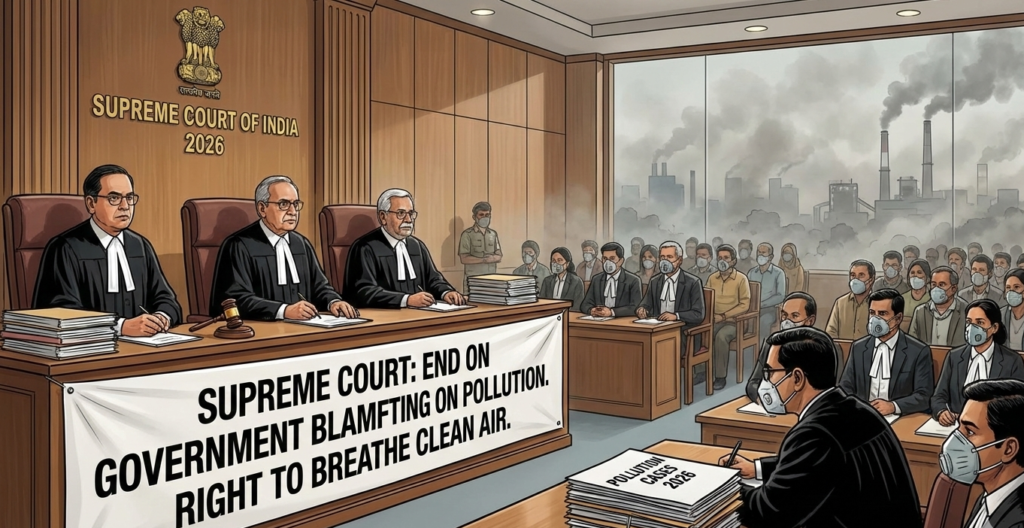
On December 11, 2025, a Supreme Court bench led by Chief Justice Surya Kant heard urgent pleas from gaming operators seeking immediate judicial intervention. The industry pressed for an early hearing, citing the rapid collapse of operations. The Chief Justice’s response was unequivocal: “Everything is shut down… We are listing in January. That is what I am promising.”
The court indicated that constitutional challenges involving legislative competence are typically assigned to three-judge benches, and the PROGA matter would be referred to accordingly. The hearing is expected to take place on January 21, 2026.
Despite repeated requests for interim relief, a temporary stay on PROGA’s enforcement, the court declined, leaving the ban fully operational. For an industry that claims “every week of delay” accelerates its existential crisis, this timeline offers little comfort.
The Unintended Consequences: Migration to Offshore Platforms
Industry representatives warned the court of troubling trends emerging since the ban. A survey cited by the Economic Times revealed dramatic shifts in user behavior:
- Before PROGA: Only 3.4% of users spent more than two hours on offshore platforms
- After PROGA: This figure surged to 44%
Jaya Chahar, founder and CEO of JCDC Sports, argued that the prohibition “pushes fan engagement away from regulated Indian platforms into unregulated offshore spaces, which defeats the very intent of consumer protection.”
These offshore platforms operate beyond Indian regulatory oversight, lack consumer protections, and potentially expose users to greater risks, precisely the harms PROGA purportedly aims to prevent. Users report spending significantly more time on these unregulated sites, which are often easier to use for deposits and withdrawals.
The Economic Toll: Jobs, Investment, and Tax Revenue at Risk
The gaming sector’s collapse threatens substantial economic contributions:
Employment Impact:
- Direct employment of approximately 200,000 skilled professionals
- Potential job creation of 250,000 positions by 2025 now in jeopardy
- Indirect employment in content creation, with 300,000 creators and streamers reaching 600 million users
- Ancillary jobs in production, editing, and graphic design
Investment Climate:
- Foreign investors writing off billions in investments
- Chilling effect on future FDI in India’s digital economy
- Consolidation favoring large players at the expense of startups and innovation
Tax Revenue:
- GST collections from online gaming increased 412% following 2023 rate hikes
- Monthly collections reached ₹1,200 crore after the 28% GST implementation
- Projected direct tax contributions of ₹6,500-6,800 crore during FY24-28
- Estimated indirect tax revenue of ₹75,000-76,000 crore at risk
The Dual Blow: GST and PROGA
The online gaming industry had already been reeling from a 28% GST imposed on the full face value of bets rather than gross gaming revenue. This tax structure, implemented in 2023, significantly compressed profit margins. Dream11, for instance, cut its FY 2024 profit guidance by 80% despite achieving ₹6,384 crore in revenue during FY 2023.
PROGA arrived as the second devastating blow, creating what industry insiders describe as an impossible operating environment. The combination of punitive taxation and an outright ban has left even well-capitalized platforms unable to sustain operations.
International Comparisons and India’s Digital Economy Ambitions
India’s approach contrasts sharply with global trends. Most developed economies regulate online gaming through licensing frameworks, consumer protection measures, and responsible gaming requirements rather than blanket prohibitions. Countries like the United Kingdom, Australia, and several U.S. states have created regulated markets that generate substantial tax revenue while addressing social concerns.
The PROGA controversy also raises questions about India’s broader digital economy ambitions. The government aims to build a $1 trillion digital economy, yet heavy-handed regulation in one of the fastest-growing segments threatens investor confidence across the technology sector.
Lok Sabha member Bansuri Swaraj defended the ban, writing that PROGA “unmasked the wolf for what it is” and describing the sector as a corrosive social influence. Government representatives maintained that outward remittances via gaming platforms reached ₹5,700 crore in 2023-24, with significant tax leakages.
As the three-judge Supreme Court bench prepares to hear constitutional challenges in January 2026, several scenarios could unfold:
Best Case for Industry:
- Court strikes down PROGA as unconstitutionally infringing on state powers
- Industry rebounds with regulatory clarity
- Jobs and investments return to legitimate, regulated platforms
Middle Ground:
- Court upholds Parliament’s authority but requires distinctions between skill and chance
- Framework regulations replace blanket prohibition
- Licensing regime emerges balancing regulation with industry viability
Worst Case for Industry:
- Court upholds PROGA in its entirety
- Real money gaming sector effectively eliminated in India
- Migration to offshore platforms accelerates
- Massive job losses and investment write-offs become permanent
The Stakes: Beyond Gaming
This legal battle transcends the gaming industry. At stake are fundamental questions about India’s federal structure, the balance between public welfare and economic freedom, and the government’s approach to regulating emerging digital sectors.
The outcome will signal whether India pursues technology regulation through collaborative frameworks that address genuine concerns while fostering innovation, or through blanket prohibitions that may achieve short-term political objectives at the cost of long-term economic potential.
For the 200,000 workers whose livelihoods depend on this sector, for the 591 million gamers who have made India a global gaming powerhouse, and for investors assessing India’s regulatory predictability, the Supreme Court’s January ruling cannot come soon enough.
Conclusion: A Crossroads for India’s Digital Future
India’s online gaming industry has reached a critical inflection point. What was recently celebrated as one of the world’s fastest-growing entertainment sectors now stands on the brink of extinction, caught between legitimate regulatory concerns and the unintended consequences of sweeping prohibition.
The ₹1 lakh crore question facing the Supreme Court in January 2026 is whether India will find a balanced regulatory path that addresses social concerns while preserving a thriving industry or whether PROGA represents game over for one of the country’s most promising digital economy success stories.
As Chief Justice Surya Kant acknowledged, “Everything is shut down.” Whether it stays that way depends on the constitutional wisdom of the three-judge bench that will soon decide the fate of India’s gaming revolution.
The world is watching. India’s gaming community is waiting. And for an industry experiencing what its leaders call “civil death,” January 2026 cannot arrive fast enough.

Ishwarya Dhube is a third-year BBA LLB student who combines academic rigor with practical experience gained through multiple legal internships. Her work spans various areas of law, allowing her to develop a comprehensive understanding of legal practice. Ishwarya specializes in legal writing and analysis, bringing both business acumen and hands-on legal experience to her work.
* Views are personal